
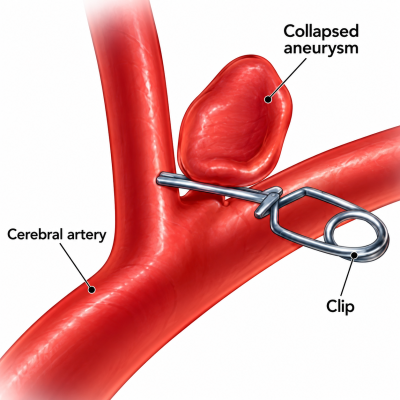
A brain aneurysm is a weak spot in the wall of a blood vessel (artery) in your brain. Think of it like a balloon that forms on the side of a garden hose when the hose wall becomes thin. This weak area can bulge outward, creating a balloon-like pouch filled with blood.
Brain aneurysms can be dangerous because they may burst or rupture, causing bleeding in or around the brain. This bleeding can be life-threatening and requires immediate medical attention. However, many people have brain aneurysms that never rupture and may not even know they have one.
Brain aneurysms have several important features:
Size and Location: They can be small (like a pea) or large (like a cherry). They most commonly occur at the base of the brain where major arteries branch off.
Risk Factors: Some things increase your chances of developing a brain aneurysm or causing your aneurysm to grow or burst:
High blood pressure and smoking are modifiable risk factors meaning you can do something about them. Left unchecked, they also increase your risk with treatment. If you have a brain aneurysm, you should quit smoking and also see your GP regularly to ensure your blood pressure is managed appropriately.
Types: There are different shapes – some look like berries hanging from a stem, while others cause the whole blood vessel to bulge outward (fusiform).
Growth: Aneurysms can remain the same size for years, or they may slowly grow larger over time.
Your doctor will discuss the best treatment plan for you.
You might have a problem with your shunt if you notice:
If you have any of these signs, contact your doctor, surgeon, or go to the nearest emergency department right away.
If you’re worried about any symptoms, contact your doctor or visit a hospital for advice.
Unruptured aneurysms often have no symptoms and are discovered by chance during scans for other reasons. However, some people may experience:
Ruptured aneurysms cause sudden, severe symptoms that need emergency care:
Emergency Signs - Call 000 Immediately: If you experience any of these sudden, severe symptoms, this could be a ruptured aneurysm - a medical emergency:
Warning Signs - See Your Doctor Promptly: These symptoms could indicate an unruptured aneurysm and should be checked:
Important to Remember:
Your doctor will explain the results and what they mean for you.
IMPORTANT FOR ALL PATIENTS.
If you are on any blood thinning medications such as anti-platelet, anti-coagulant or anti-inflammatory medications, they should be stopped one week prior to any surgery. Examples of these medications include plavix, co-plavix, prasugrel, ticagrelor, asasantin, aspirin, disprin, solprin, astrix, cartia, warfarin, pradaxa, dabigatran, rivaroxaban, apixaban, clexane, heparin, celebrex, mobic, naproxen, indomethacin, diclofenac, ibuprofen.
Some diabetes medications need to be stopped up to three weeks prior to surgery. Please discuss with your doctor if you are taking one of these medications.
Similarly, any herbal or natural remedies including (but not limited to) traditional Chinese herbal remedies and prescriptions, naturopathic and homeopathic treatments, and supplements (such as glucosamine, garlic, ginger, ginkgo, ginseng, turmeric and fish oil) should be stopped one week prior to any surgery.
If these medications are not stopped, then your surgery may need to be delayed and rescheduled for reasons of safety. If you are unsure about whether you need to stop any of your medications, please ask your doctor.
Depending on your general fitness and your medical co-morbidities, you may require an assessment by physician specialists and an anaesthetist to assess your safety for surgery, before a decision can be made about your suitability for surgery.
Prior to any surgery, you will need to fast. On the night prior to surgery, your last mouthful of food should be prior to 12 midnight. On the day of surgery, you can sip clear water up until 4 hours prior to your surgery. You may use this opportunity to take medications that your doctor is happy for you to take. Please check with your doctor, what you should do with your medications and write those instructions here.
A member of staff from the hospital or the surgeon’s rooms will contact you up to three days prior to your admission and discuss this with you. They will also discuss your hospital paperwork if this has not been done. This is your opportunity to ask any questions you may have about your upcoming admission.
Important Note: This information is for educational purposes only and does not replace professional medical advice. If you have concerns about the above, or are experiencing symptoms, please consult with a qualified healthcare professional for proper diagnosis and treatment options.
In Case of Emergency: If you or someone you know experiences sudden, or severe onset of symptoms or other emergency symptoms, call 000 (Australia) or your local emergency number immediately.
This information has been prepared to help you understand your neurological condition better. Your healthcare team is the best source for advice about your specific situation and treatment options.
©2026 Capri Neuro. All Rights Reserved.
Capri Neuro is not an urgent care or after hours service. If you require emergency care, please present to your nearest Emergency Department.